Switching Careers Without Starting Over
A career change doesn't mean your experience resets to zero. The trick is translating what you've done into the language of where you're going.

The fear that stops most career switchers is that they'll be judged as a beginner — competing against people with a decade in the field. But you're not starting over; you're carrying a body of work into a new context. The resume's job is to do that translation for the reader so they don't have to.
Translate, don't discard
Your old title is noise to the new field. What matters is the underlying work: project management, stakeholder negotiation, data analysis, teaching. Name the transferable skill, then show it with an example from your past life.
Same job, reframed in the vocabulary a hiring manager in operations, finance, or project management already uses.
Lead with a bridge, not an apology
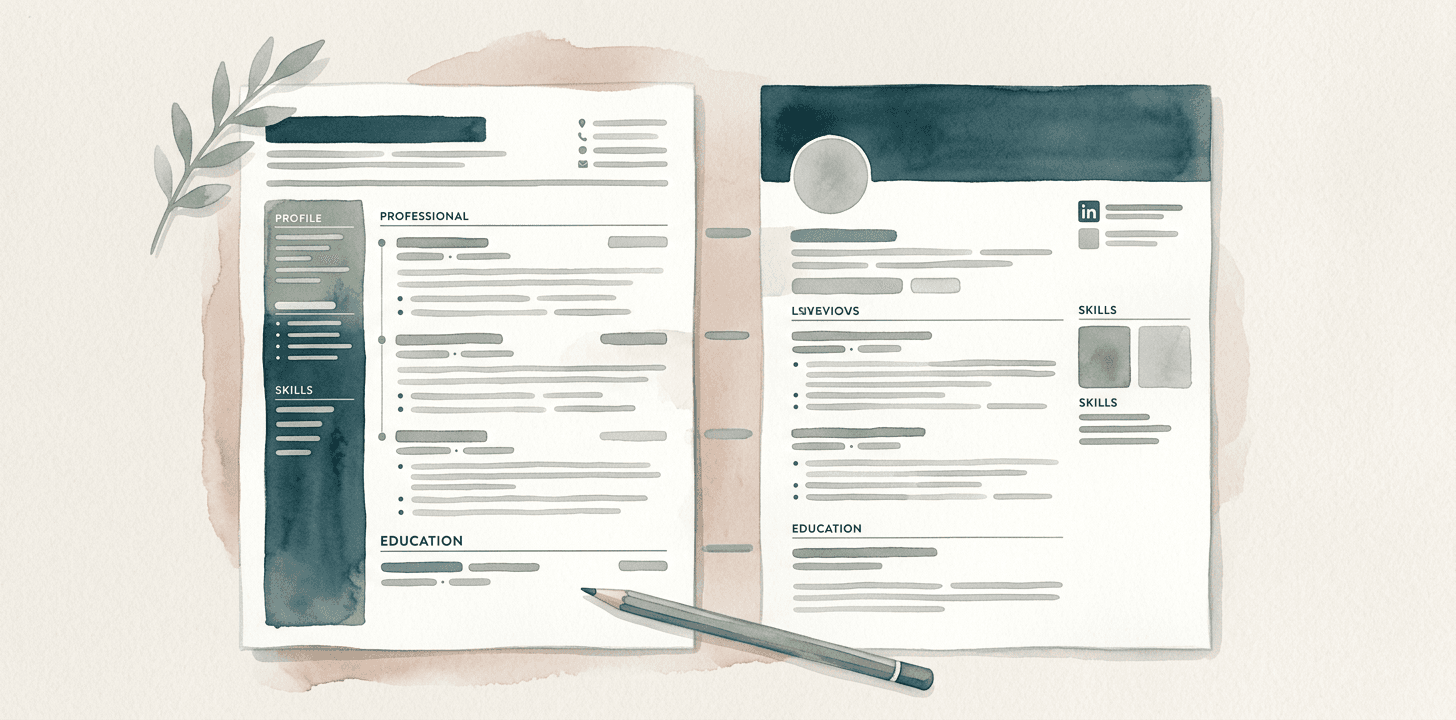
Open with a short summary that states the pivot plainly and points at the overlap. Don't apologize for the change — frame it as a deliberate move that your prior experience uniquely prepares you for. A skills section near the top helps the reader see the fit before they hit the chronology.
Paste the target job description and Resumez maps your existing experience to the role's requirements — surfacing the transferable skills worth leading with.