Make Your LinkedIn Match Your Resume (Not the Other Way Around)
Recruiters cross-check the two the moment they're interested. Small contradictions read as carelessness. Here's how to keep them consistent without cloning them.
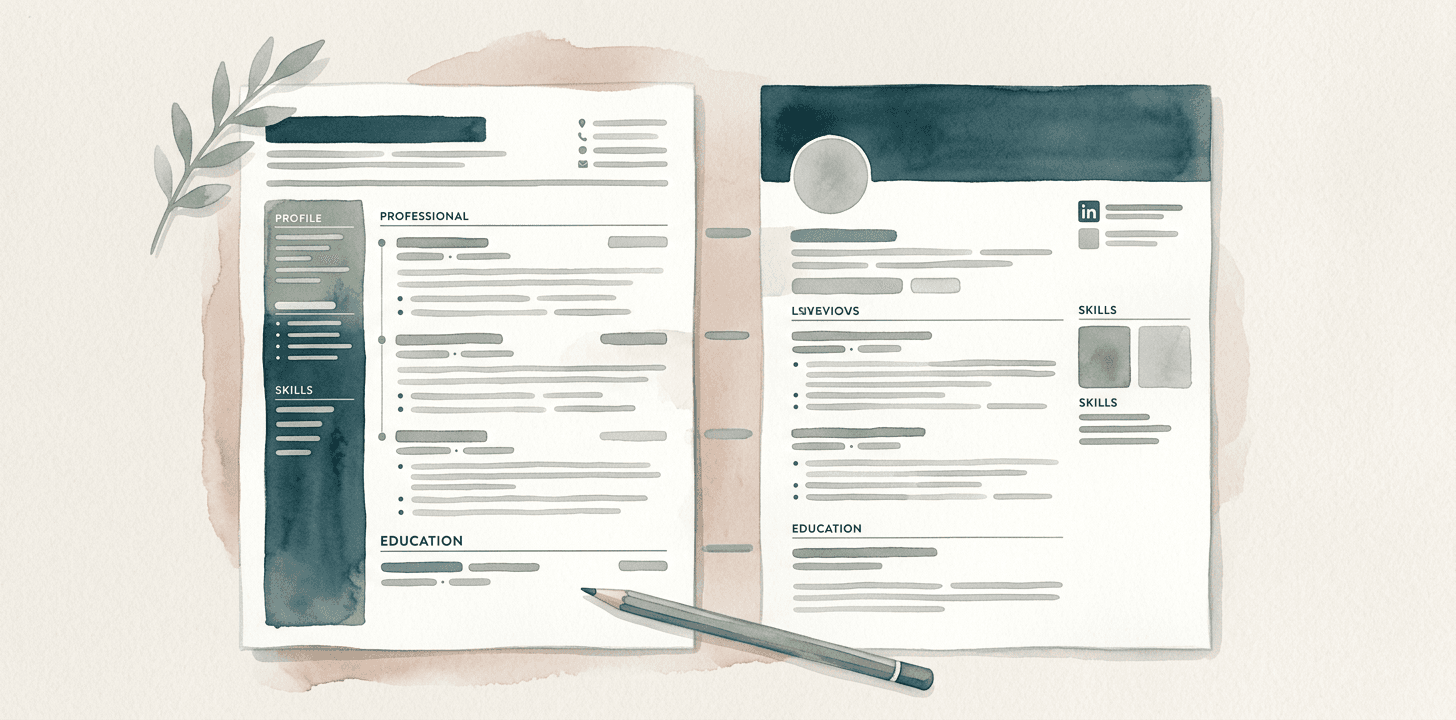
The first thing a recruiter does after your resume catches their eye is open your LinkedIn. If the dates don't line up, the titles differ, or one lists a job the other omits, the read isn't "which is right?" — it's "this person is careless." Consistency is a trust signal, and it's cheap to get right.
Reconcile the facts first
Before polishing anything, make the load-bearing facts identical: employers, exact titles, and start/end months. These are the fields a recruiter scans for a mismatch. If your resume says "Senior Engineer" and LinkedIn says "Engineer II," pick the accurate one and fix the other.
Let each format do its job
Matching facts doesn't mean matching prose. The resume is a tight, tailored argument for one role. LinkedIn is a standing profile a stranger might land on for any reason.
- Resume — sharp, quantified bullets aimed at the job you're applying to.
- LinkedIn — a fuller summary in the first person, room for a portfolio, and the softer context a resume has no space for.
Export your canonical profile and you have one source of truth — generate a tailored resume from it, then paste the same summary into LinkedIn so the facts never drift apart.