The One-Page Rule Isn't Dead — But It's Not What You Think
One page is a discipline, not a law. Here's how to know when a second page helps you and when it just buries your best work.
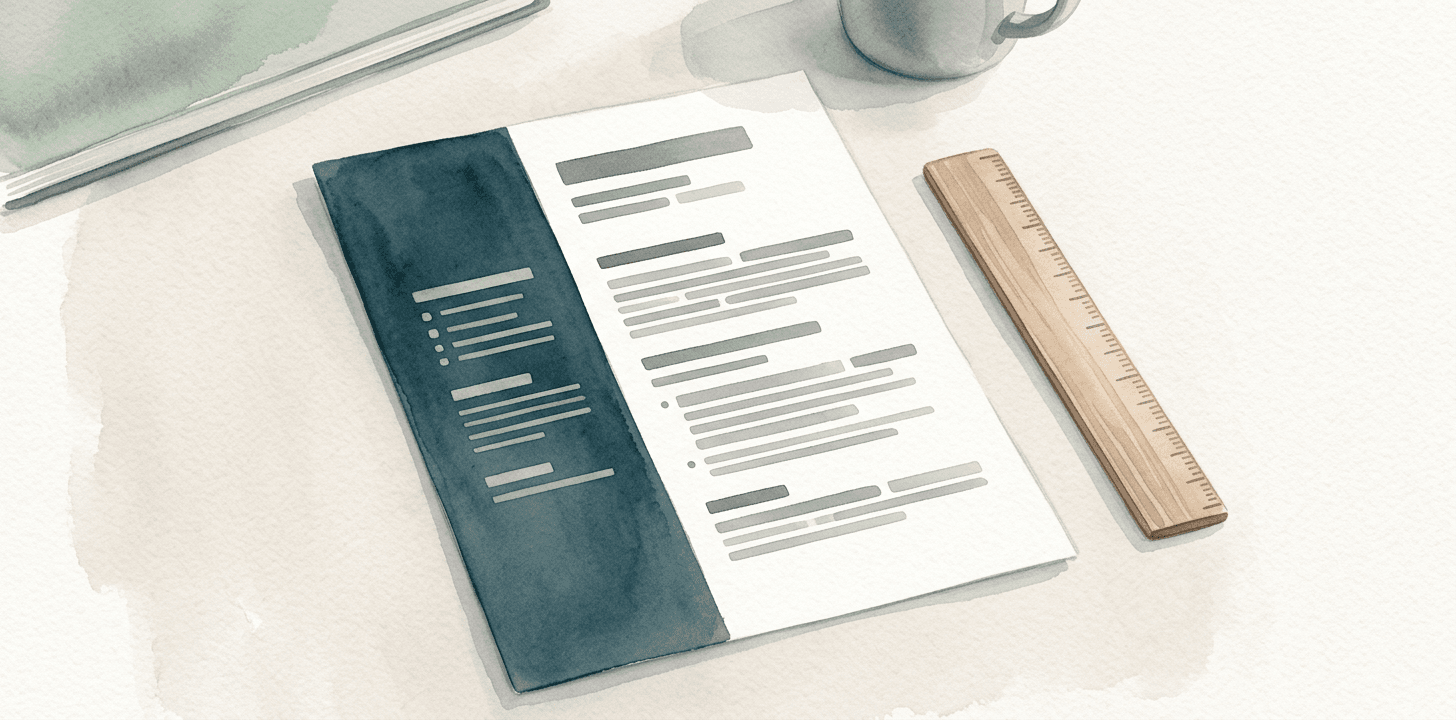
The one-page rule gets argued about like scripture. The truth is duller: one page is a forcing function. It makes you cut the weak lines. The page count is not the point — the editing is.
When one page is right
If you have under ten years of experience, one page is almost always the move. It forces ruthless prioritization, and a recruiter scanning fifty resumes will thank you for the brevity. A tight one-pager reads as confidence.
When a second page earns its place
A second page is justified when you have genuinely more relevant material than fits — not more material, more relevant material. Senior engineers, academics, and people with long publication or project lists are the usual exceptions.
- 10+ years of directly relevant experience.
- A research or publication record the role actually cares about.
- A portfolio of shipped projects that each carry weight.
Never let a single orphaned line spill onto page two. Either it earns the page or it gets cut. A two-line second page looks like a mistake.
The real test
Read your resume bottom-up and ask of each line: if I deleted this, would the case get weaker? If the answer is no, the line is taking up space your best work could use — regardless of which page it's on.
If your second page exists only because the margins felt empty, you don't have a two-page resume. You have a one-page resume with a formatting problem.
Stop counting pages. Start counting the lines that make your case — and delete the ones that don't.