Keywords Without Keyword Stuffing
Matching the job description's language helps you pass the filter. Cramming the same term into every line gets you flagged. The line between them is evidence.
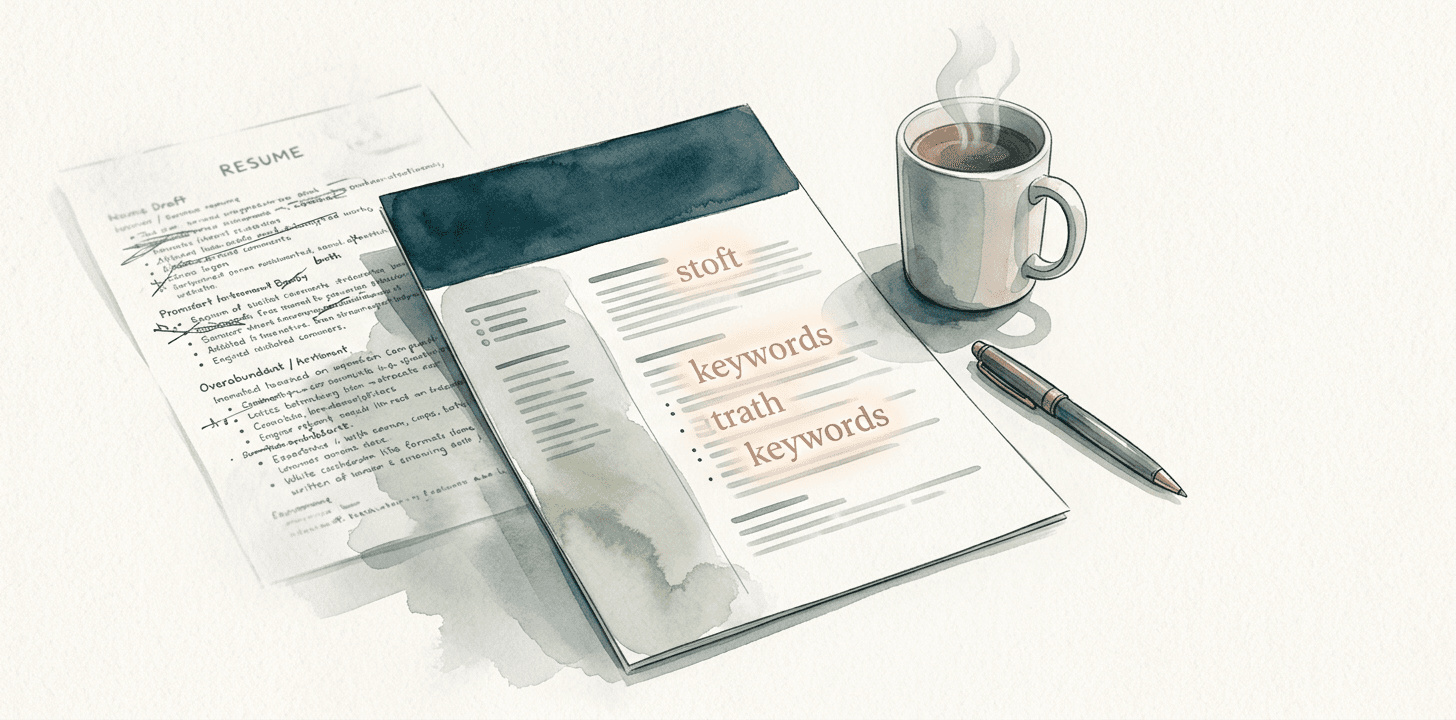
Keyword advice pulls in two directions. "Match the job description" is real — most resumes are scored on term overlap first. But "put the keywords everywhere" is how you end up with a page that reads like it was written for a machine, because it was. Both the ATS and the human catch it.
Earn each keyword with evidence
A keyword belongs on your resume when you can back it with a concrete example. Drop the term into a bullet that proves it, not into a naked list of buzzwords.
The second version contains the keyword once and proves it. That reads better to the parser and the person, because relevance beats repetition in modern ATS scoring.
Mirror the posting, then stop
Pull the terms that actually appear in the job description and use the exact phrasing where it's honest. But once a keyword is present and supported, adding it again buys nothing — and a human reviewer reading three "synergy"s in a row will hold it against you.
The gap analysis shows which of the posting's key terms your resume is missing — so you add the ones that matter instead of stuffing the ones that don't.